Waste
Driving Africa’s Clean and Sustainable Future
Waste Management Initiative
“From Waste to Wealth – Driving Africa’s Clean and Sustainable Future”
Africa faces an escalating waste management crisis fueled by rapid population growth, urbanization, and industrialization. Over 125 million tonnes of solid waste are generated annually, a figure projected to double by 2050. In many cities, up to 90% of waste is dumped or burned in open sites, resulting in pollution, public health hazards, and environmental degradation.
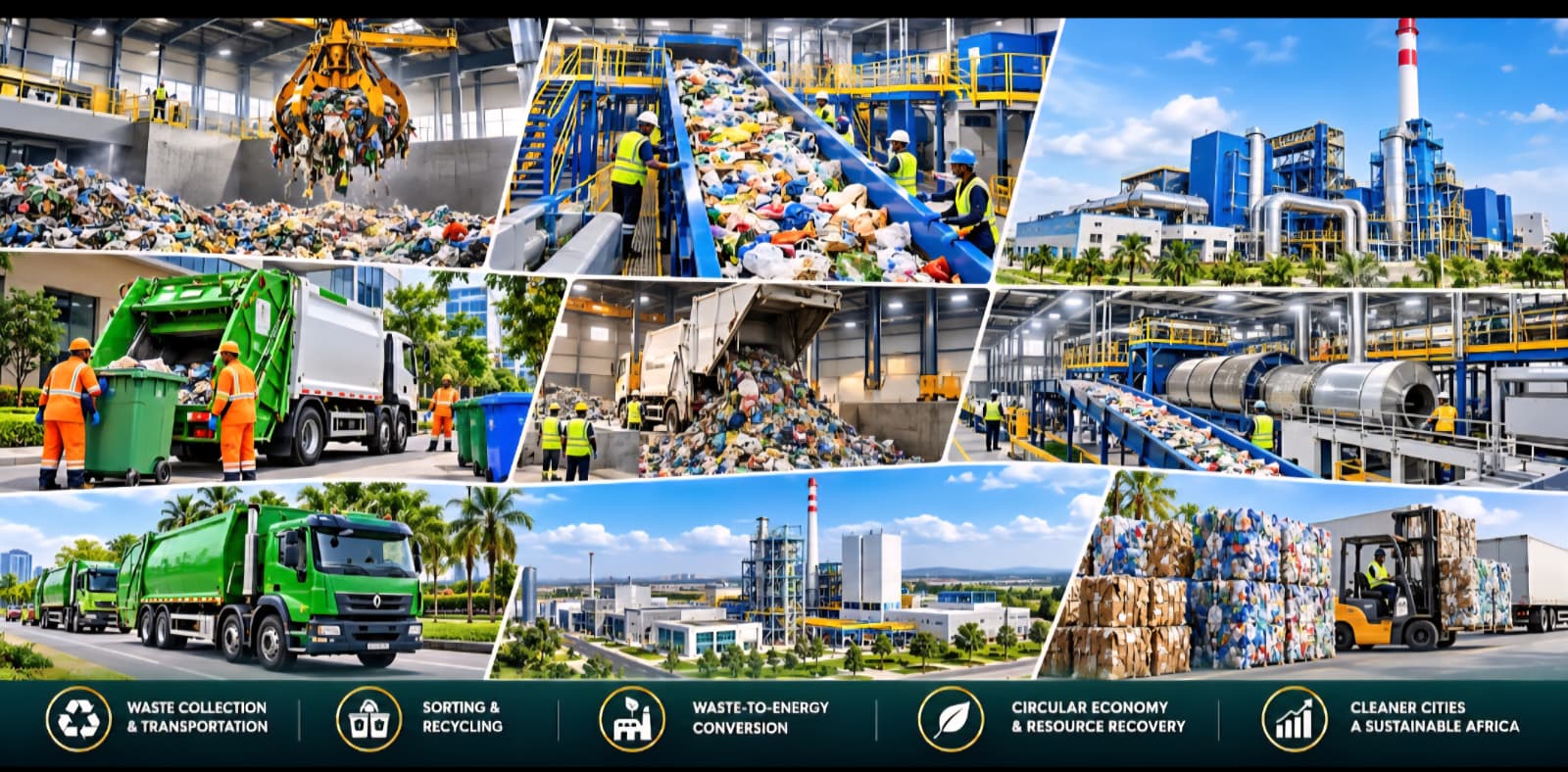
The AIIL Waste Management Initiative seeks to turn this challenge into an opportunity by developing integrated, sustainable, and circular waste management systems. Our approach will protect the environment, create green jobs, stimulate economic growth, and modernize urban infrastructure through strategic investments and partnerships.
Vision
“To lead Africa’s transformation into a clean, circular, and sustainable economy where waste is harnessed as a valuable resource for environmental protection, economic empowerment, and improved quality of life.”
Mission
The AIIL Waste Management Initiative is committed to transforming Africa’s waste challenges into engines of sustainable growth. Our mission is to develop integrated, circular waste management systems that protect the environment, create green jobs, empower communities, and deliver long-term value through innovative recycling, waste-to-energy solutions, and strategic public-private partnerships.
Core Pillars
1. Sustainability & Circular Economy
Promote waste reduction, recycling, and resource recovery to achieve zero-waste cities.
2. Innovation & Technology
Deploy advanced waste-to-energy solutions, digital platforms, and smart infrastructure to modernize waste management.
3. Public-Private Partnerships (PPPs)
Foster collaboration between governments, private sector, NGOs, and communities to deliver scalable, efficient systems.
4. Social Inclusion & Empowerment
Create opportunities for youth and women entrepreneurs in recycling and green enterprises, strengthening livelihoods.
5. Environmental Stewardship
Protect ecosystems and public health by reducing pollution, improving sanitation, and ensuring responsible waste disposal.
6. Economic Growth & Job Creation
Turn waste management into a driver of industrial growth, renewable energy generation, and sustainable urban development.
Strategic Interventions
- Integrated Recycling Infrastructure: Establish large-scale recycling hubs for plastics, metals, paper, and electronic waste.
- Waste-to-Energy Projects: Convert waste into renewable energy through incineration and anaerobic digestion technologies.
- Smart Waste Management Solutions: Implement digital platforms and IoT-enabled tracking for optimized collection and citizen engagement.
- Community-Based Systems: Empower local communities with collection, sorting, and composting facilities.
- Policy and Regulatory Support: Work with governments to strengthen waste management policies and enforcement.
Expected Impact
- Significant reduction in open dumping and burning of waste.
- Expanded access to modern, safe, and sustainable waste management systems.
- Creation of hundreds of thousands of green jobs across Africa.
- Generation of clean, renewable energy from waste resources.
- Improved public health and environmental quality in urban and rural areas.
Conclusion
The AIIL Waste Management Initiative represents a transformative approach to Africa’s waste challenges. By mobilizing capital, technology, and partnerships, AIIL aims to convert waste into wealth, ensuring a cleaner, healthier, and more sustainable future for African cities and communities.
Featured Projects
Our featured projects highlight impactful initiatives that drive sustainable development and innovation across the African continent. Each project is designed to strengthen critical infrastructure, promote economic growth, and improve quality of life. Our commitment is to building resilient communities and empowering future generations. Through strategic partnerships, cutting-edge technology, and local capacity building, we are shaping a more inclusive and prosperous Africa.