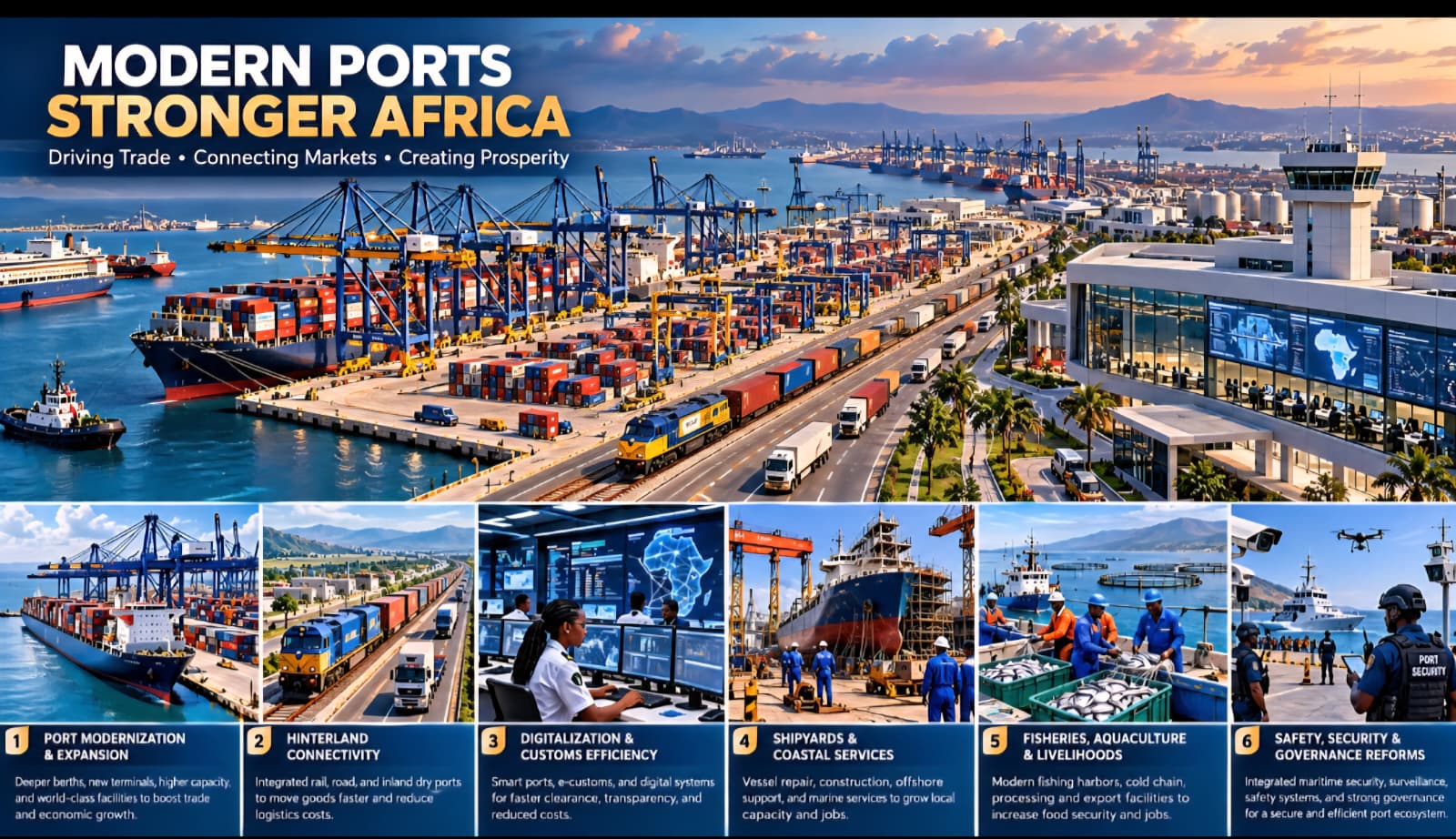
Ports, Marine & Coastal Infrastructure Investment for Africa’s Growth
African Infrastructure Investment Limited (AIIL) recognizes that ports, marine, and coastal infrastructure are catalytic levers for Africa’s economic transformation. Efficient, modern, and climate-resilient coastal systems unlock trade competitiveness, industrialization, jobs, and food security while positioning Africa as a strategic hub for global and intra-African commerce.
AIIL’s initiative aims to modernize ports, strengthen marine infrastructure, and secure coastal communities through investments that integrate physical upgrades, digital systems, hinterland connectivity, and environmental safeguards.
The Economic Case for Investment
- Trade Competitiveness: Modern ports reduce logistics costs, ship turnaround times, and bottlenecks, increasing competitiveness of African exports (agriculture, minerals, manufacturing).
- Industrialization & Value Chains: Port-adjacent industries—logistics, cold chains, agro-processing, ship repair, light manufacturing—add domestic value and create sustainable jobs.
- Regional Integration: Interoperable port systems connect landlocked countries to markets, aligning with AfCFTA and boosting intra-African trade.
- Employment & Skills Development: Expansions in construction, operations, logistics, and marine services create jobs across the spectrum.
- Climate Resilience: Investing in coastal defenses and resilient terminals now mitigates future risks from sea-level rise, erosion, and extreme weather.
Key Challenges Addressed by AIIL
Congestion, vessel delays, and outdated cargo handling systems.
- Inadequate hinterland connectivity — poor road and rail linkages.
- Limited dredging and shallow channels that restrict larger vessels.
- Weak digitalization, customs inefficiencies, and fragmented governance.
- Coastal erosion, flooding, and environmental degradation impacting assets and communities.
AIIL Priority Investment Areas
1. Port Modernization & Expansion
- Deepened channels and berths for larger vessels.
- State-of-the-art berth cranes, automated yards, Ro-Ro facilities, and cold storage.
- Expanded multipurpose and container terminals.
2. Hinterland Connectivity
- Rail corridors linking ports to industrial and agricultural zones.
- Upgraded arterial roads, logistics parks, and inland container depots (ICDs).
3. Digitalization & Customs Efficiency
- National single window systems and port community platforms.
- Electronic manifests, e-payments, and paperless customs to cut dwell time.
4. Marine Maintenance & Navigation
Year-round dredging, navigational aids, and channel management.
5. Shipyards & Coastal Services
Regional ship repair yards, bunkering services, and maritime skill hubs.
6. Green & Resilient Ports
- Shore power, electrified equipment, wastewater management.
- Nature-based coastal defenses: mangrove restoration, climate-adaptive seawalls
7. Fisheries, Aquaculture & Livelihoods
Cold chains, landing sites, and processing hubs for small-scale fishers.
8. Safety, Security & Governance Reforms
- Enhanced port security, transparent tariff regimes, and streamlined concession frameworks.
- Financing & Delivery Models (AIIL’S financial model
AIIL Anchor Investment Model: Leveraging AIIL’s consortium partnerships to attract anchor tenants (logistics firms, processors, global shipping lines).
Governance & Institutional Reforms
- Establish independent port regulators to ensure transparency.
- Standardize concession contracts and tariff regimes.
- Strengthen customs and port agencies with digital skills and anti-corruption safeguards.
- Promote regional policy alignment for transshipment, cabotage, and cross-border marine trade.
Environmental & Social Safeguards
- Mandatory Environmental & Social Impact Assessments (ESIAs) before major works.
- Compensation and resettlement programs for affected communities.
- Prioritize local hiring, capacity-building, and stakeholder engagement.
- Continuous monitoring of fisheries, biodiversity, and water quality
Skills, Technology & Value Capture
- Invest in maritime training centers for pilots, engineers, and logistics managers.
- Local content clauses in concessions to grow domestic supply chains.
- Deployment of IoT, AI, and blockchain for predictive maintenance, cargo tracking, and trade transparency.
- Foster port-driven industrial clusters: agro-processing, cold storage, and light manufacturing.
Roadmap for Implementation
- Phase 1 (0–2 years): Quick wins — dredging, digital single windows, priority port expansions
- Phase 2 (2–5 years): Integrated rail/road connectivity, new shipyards, cold chain infrastructure.
- Phase 3 (5–10 years): Specialized clusters, resilient coastal defenses, regional trade integration.
Conclusion — AIIL’s Strategic Call
African Infrastructure Investment Limited positions port, marine, and coastal infrastructure as pillars of Africa’s future prosperity. By combining physical modernization, digital transformation, resilient design, and transparent governance, AIIL is delivering projects that reduce trade costs, create jobs, stimulate industrialization, and protect coastal communities.
With its proven financing models, partnerships, and regional integration approach, AIIL is committed to transforming Africa’s coastal assets into engines of inclusive economic growth and global competitiveness.
Featured Projects
Our featured projects highlight impactful initiatives that drive sustainable development and innovation across the African continent. Each project is designed to strengthen critical infrastructure, promote economic growth, and improve quality of life. Our commitment is to building resilient communities and empowering future generations. Through strategic partnerships, cutting-edge technology, and local capacity building, we are shaping a more inclusive and prosperous Africa.