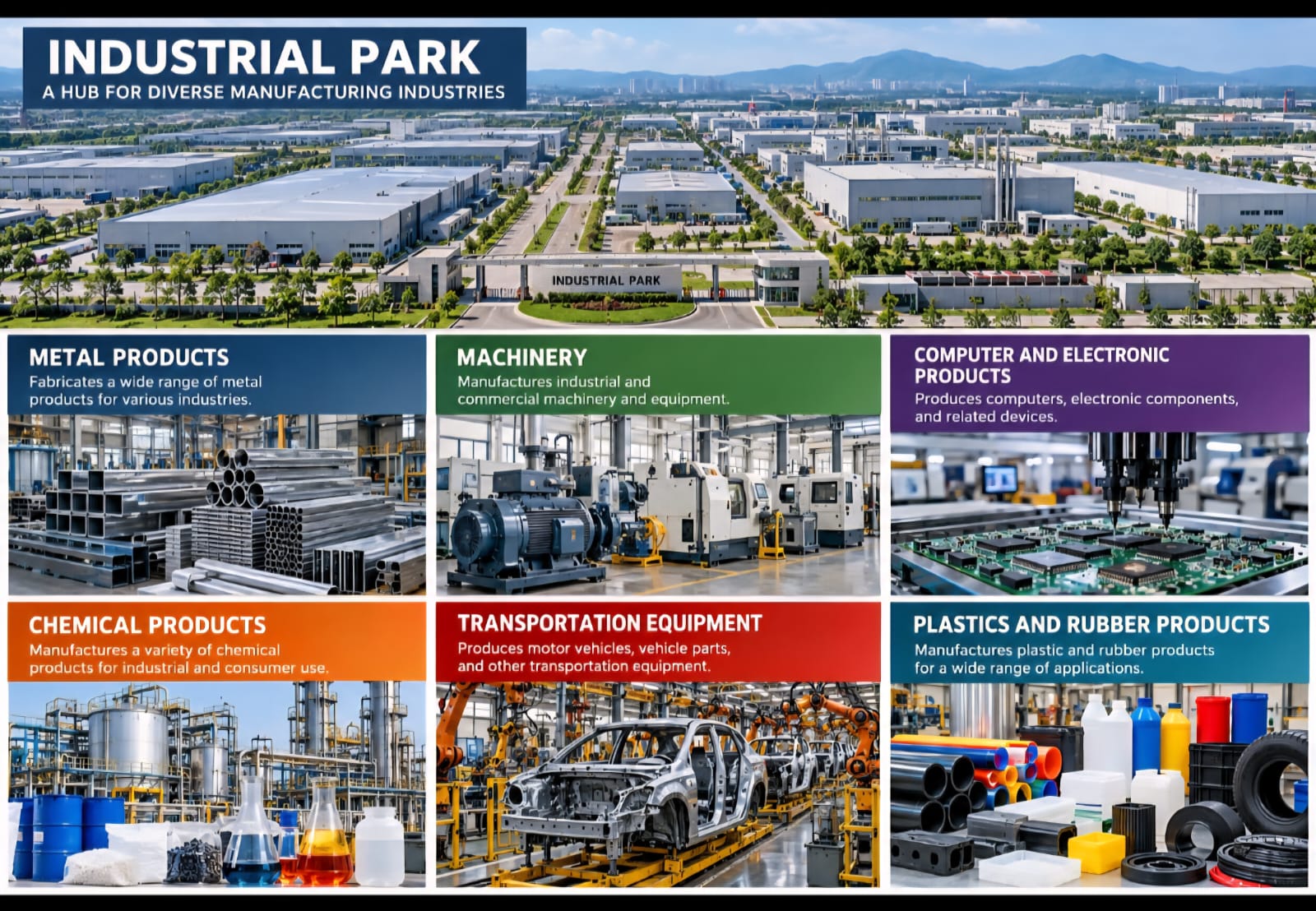
Industrial
African Infrastructure Investment Limited (AIIL) Industrial & Resource Infrastructure Initiative (IRII) Powering Africa’s Economic Transformation Across All Sectors
African Infrastructure Investment Limited (AIIL), in partnership with regional governments, development institutions, and private investors, is spearheading the Industrial & Resource Infrastructure Initiative (IRII). This initiative is designed as a Pan-African, multi-stakeholder framework that addresses Africa’s persistent infrastructure deficit while unlocking the full potential of its vast natural resources and human capital.
Through integrated investment in energy, transport, water systems, ICT, mining beneficiation, agro-processing, and industrial development, IRII aims to create sustainable, climate-resilient, and inclusive infrastructure that will power Africa’s growth across agriculture, manufacturing, services, and extractive industries.
The IRII is a bold step toward delivering broad-based prosperity, supporting regional integration, and positioning Africa as a globally competitive hub for industrial production, innovation, and resource-driven value creation.
Vision and Objectives
Vision: To create a connected, industrialized, and climate-resilient Africa where infrastructure and resource-based development serve as catalysts for inclusive economic transformation.
Objectives:
- Bridge Africa’s infrastructure gap through integrated energy, transport, water, ICT, and industrial corridors.
- Enhance value addition in natural resources by shifting from raw exports to beneficiation, refining, and local processing.
- Expand access to reliable, affordable energy and digital connectivity, particularly in underserved rural and peri-urban regions.
- Drive job creation, skills transfer, and local content development to maximize domestic value capture.
- Establish a framework of good governance, risk management, and transparency to attract sustained long-term investment.
- Embed climate resilience, ESG safeguards, and inclusive growth as cornerstones of all projects.
Strategic Pillars
1. Industrial & Resource Infrastructure Backbone
- Energy systems: Grid expansion, renewable energy, hybrid mini-grids, and stronger transmission to support industrial and household demand.
- Transport & logistics: Modernized multimodal corridors (rail, road, ports, airports, inland waterways) to connect mines, farms, and factories with domestic and regional markets.
- Water & industrial use: Integrated water management systems for urban supply, irrigation, flood control, and industrial clusters.
- Industrial parks & zones: Establish AIIL-led resource beneficiation and manufacturing hubs with reliable power, water, and logistics services.
- ICT backbone: Universal broadband, data centers, digital trade platforms, and e-governance systems to anchor digital economies.
- Resource value chains: Catalyze beneficiation of critical minerals, agricultural commodities, and petroleum products into refined, export-ready goods.
2. Financing & Investment Innovation
- Blended finance: Leverage concessional finance with commercial capital to de-risk large infrastructure projects.
- Public–private partnerships (PPP): Bankable models with transparent risk-sharing frameworks.
- Regional & domestic finance: Mobilize sovereign wealth funds, pension funds, and regional DFIs for long-term capital.
- Project pipelines: Develop standardized, investment-ready project portfolios across sectors.
3. Governance & Regulatory Frameworks
- Streamline permitting and approvals for faster project rollout.
- Harmonize standards, tariffs, and regulations under AfCFTA for cross-border projects.
- Strengthen ESG compliance, community engagement, and transparency.
- Promote local content policies for jobs, SME development, and technology transfer.
4. Industrial Development & Local Capacity
- Skills & vocational training in engineering, ICT, energy, and manufacturing.
- Support for SMEs in supply chains through finance and technical assistance.
- Promotion of downstream beneficiation in mining, agriculture, and petrochemicals.
5. Energy Transition & Resource Management
- Expand affordable electricity access in rural and peri-urban areas.
- Develop a diversified energy mix: solar, wind, hydro, natural gas, and storage solutions.
- Invest in critical minerals (lithium, cobalt, rare earths) value chains.
- Encourage circular economy practices in mining and industrial activities.
6. Digital Transformation & Innovation
- Universal broadband access to unlock fintech, e-commerce, and digital industries.
- AIIL-led innovation hubs for industrial analytics, e-governance, and research partnerships.
- Data governance frameworks to secure trust in Africa’s digital economy.
7. Climate Resilience & Sustainability
- Climate risk assessments embedded in all projects.
- Adoption of nature-based solutions for flood control, carbon capture, and biodiversity.
- Responsible mining with land rehabilitation and community co-ownership.
8. Monitoring, Governance & Accountability
- Independent oversight bodies to track project delivery and financial flows.
- Key indicators: Jobs created, energy access expanded, trade volumes increased, value-added exports, and ESG compliance.
- Gender and youth inclusion programs embedded in project execution.
Sectoral Impact Potential
- Agriculture: Agro-industrial parks, irrigation systems, cold storage, and logistics corridors for value-added exports.
- Manufacturing: Cost-efficient industrial parks with reliable infrastructure to attract global manufacturers.
- Mining: Transition from raw exports to AIIL-supported beneficiation hubs for metals and minerals.
- Energy: Expansion of generation and distribution networks to power industry and households.
- Transport: Reduced freight costs, faster transit, and greater AfCFTA competitiveness.
- Digital economy: Acceleration of fintech, e-commerce, AI, and digital manufacturing.
Implementation Framework
- AIIL Coordinating Secretariat: A central unit to align project development, financing, and execution.
- Project Pipeline Development: Identify priority corridors, industrial clusters, and energy projects with high catalytic potential.
- Phased Rollout: Begin with high-impact, quick-win flagship projects, scaling up to regional interconnections.
- Financing Stack: Blend concessional, private, and sovereign funds to deliver bankable infrastructure.
- Stakeholder Engagement: Deep partnerships with governments, DFIs, communities, and private investors.
Risks & Mitigation
- Financing gaps: Blended finance, guarantee schemes, and long-tenor debt.
- Political/regulatory risks: Independent oversight, regional alignment, and binding PPP frameworks.
- Climate impacts: Climate-smart engineering, ESG safeguards, and adaptive project design.
- Community resistance: Co-ownership models, local hiring, and transparent grievance mechanisms.
Monitoring, Evaluation & Accountability
- Transparent dashboards for project tracking.
- Independent audits and impact assessments.
- Gender, youth, and SME participation metrics.
- Learning frameworks for continuous improvement.
Next Steps
- Stakeholder mapping and formal adoption of the IRII framework.
- Resource and infrastructure mapping across AIIL’s target countries.
- Prioritization of flagship and catalytic projects.
- Securing commitments from governments, DFIs, and private financiers.
- Launching skills and SME development aligned with project corridors.
Alignment with Continental Priorities
- AIIL’s IRII framework aligns with:
- African Union’s Agenda 2063
- Sustainable Development Goals (SDGs)
- African Continental Free Trade Area (AfCFTA)
Featured Projects
Our featured projects highlight impactful initiatives that drive sustainable development and innovation across the African continent. Each project is designed to strengthen critical infrastructure, promote economic growth, and improve quality of life. Our commitment is to building resilient communities and empowering future generations. Through strategic partnerships, cutting-edge technology, and local capacity building, we are shaping a more inclusive and prosperous Africa.