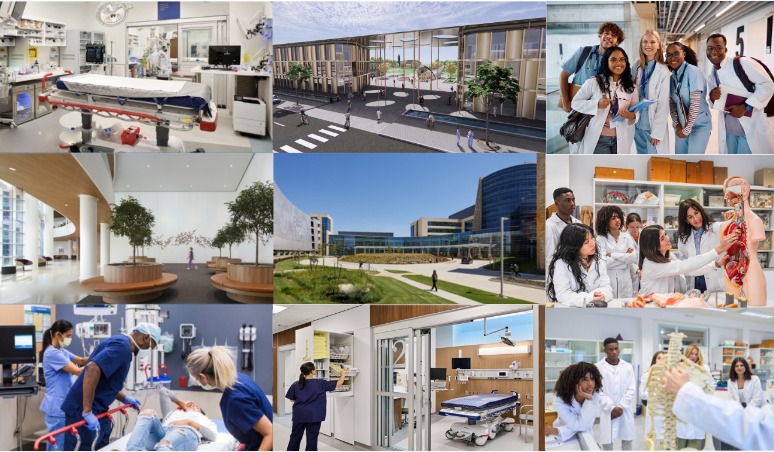
Health
African Infrastructure Investment Limited (AIIL) — Healthcare Infrastructure Initiative for Urban and Rural Communities in Africa
African Infrastructure Investment Limited (AIIL) is committed to transforming health outcomes across Nigeria and the African continent by building resilient, equitable, and sustainable health infrastructure. This initiative focuses on developing an integrated network of state-of-the-art hospitals, cancer centers, pediatric units, ambulatory clinics, and translational health science hubs to bridge critical gaps in care delivery, research, and health innovation.
AIIL’s approach combines large-scale capital investment, cutting-edge technology, workforce capacity building, and public–private partnerships (PPPs) to create health systems that are not only responsive to today’s challenges but sustainable for future generations.
Strategic Objectives
1. Universal Access to Quality Care:
Bring acute and ambulatory services within realistic travel times — 90% of urban residents within 30 minutes, rural residents within 60 minutes for primary emergency services.
2. Cancer Care Transformation:
Establish regional cancer centers equipped with radiotherapy, chemotherapy, pathology, and palliative care services to minimize cross-border medical travel and reduce cancer-related mortality.
3. Child Health Strengthening:
Build pediatric centers and neonatal ICUs to significantly reduce under-five mortality and prevent long-term disabilities.
4. Research and Innovation Hubs:
Develop translational health science centers that connect local research, clinical trials, diagnostics, and evidence-based implementation strategies.
5. Sustainable Financing & Governance:
Leverage blended finance models, sovereign co-investments, and performance-based contracting to ensure financial resilience.
6. Digital Transformation:
Deploy electronic medical records, telemedicine, and diagnostic connectivity to improve efficiency and bridge rural–urban gaps.
Core Components
1. Infrastructure Network
Regional Tertiary Hospitals (200–500 beds): Comprehensive facilities with emergency departments, ICUs, surgical suites, imaging units (CT/MRI), oncology wards, and blood banks.
Specialized Cancer Centers: Radiation therapy bunkers, linear accelerators, chemotherapy suites, pathology labs.
Ambulatory Care Clinics: Day surgery, chronic disease management, diagnostics, rehabilitation.
Pediatric Centers & NICUs: Integrated with maternity wards, immunization programs, and nutrition support.
Translational Health Science Hubs: Biobank, core laboratories, data centers, clinical trial units, and training facilities.
2. Technology & Equipment
Advanced diagnostics, radiotherapy machines, ventilators, anesthesia systems, lab automation, cold-chain systems for vaccines, and mobile diagnostic units.
3. Digital Health Infrastructure
Interoperable EMRs, telemedicine platforms, imaging PACS, clinical decision support tools, and population health analytics.
4. Workforce Development
Training programs for clinicians, nurses, biomedical engineers, and hospital administrators — ensuring capacity for long-term operations and local ownership.
5. Supply Chain & Maintenance
Centralized procurement, regional warehouses, preventive maintenance programs, and local biomedical engineering teams.
6. Governance & Financing
Public–private steering committees, sovereign partnerships, impact investors, and phased disbursement mechanisms tied to performance milestones.
Implementation Roadmap
- Phase 1 – Pilot (0–2 Years):
Launch in 2–3 selected regions with a flagship tertiary hospital, cancer center, translational hub, and a network of ambulatory clinics and pediatric units. - Phase 2 – Scale (2–5 Years):
Replicate model in additional states/countries, expand telemedicine coverage, and bring in new financing partners. - Phase 3 – Consolidation (5+ Years):
Local manufacturing/assembly of selected medical devices, capacity transfer to national health authorities, and performance-based operational contracting.
Rationale & Expected Impact
- Health Outcomes: Reduce maternal, child, and cancer-related mortality.
- Economic Growth: Create jobs, reduce productivity losses, and build investor confidence.
- Resilience: Strengthen Africa’s preparedness for future pandemics and health crises.
- Research Leadership: Enable Africa-driven innovation in diagnostics and treatments.
Monitoring & Sustainability
KPIs: Utilization rates, mortality outcomes, treatment times, patient satisfaction, and number of research studies translated into practice.
Sustainability Measures: Energy-efficient hospital design, solar power backups, safe medical waste treatment, local supply chain integration, and community health education programs.
Partnerships & Stakeholder Engagement
AIIL will collaborate with:
- National & State Ministries of Health
- Regional & Teaching Hospitals
- Development Finance Institutions (DFIs)
- Philanthropic Foundations
- Global Medical Equipment Suppliers
- Local Universities & Research Institutes
Call to Action
AIIL invites governments, development partners, and private investors to join in building a continent-wide health infrastructure revolution. Together, we can deliver accessible, affordable, and advanced healthcare systems that serve as a cornerstone for Africa’s economic and social transformation.
We understand how to support the mission and business of academic health centers uniquely. Focusing on the depth and breadth of our expertise and experience with academic health centers, we’ve documented the most helpful information to complement the research you already do, focused on strategy, planning and facility execution.
Featured Projects
Our featured projects highlight impactful initiatives that drive sustainable development and innovation across the African continent. Each project is designed to strengthen critical infrastructure, promote economic growth, and improve quality of life. Our commitment is to building resilient communities and empowering future generations. Through strategic partnerships, cutting-edge technology, and local capacity building, we are shaping a more inclusive and prosperous Africa.