Aviation Infrastructure for Africa’s Economic Transformation
Aviation is more than a mode of transport — it is a powerful driver of economic growth, trade, tourism, and regional integration. Across Africa, aviation supports millions of jobs and contributes tens of billions of dollars to GDP. With the African aviation market projected to expand steadily over the coming decades, the sector presents an urgent and strategic opportunity for transformative investment.
Nigeria, with over 30 registered airports and several designated international gateways, reflects both the opportunities and challenges facing African aviation. Traffic is concentrated in a few hubs, while many facilities remain underutilized or underdeveloped. Skills gaps, maintenance deficits, and fragmented infrastructure continue to undermine efficiency and competitiveness.
African Infrastructure Investment Limited (AIIL) recognizes this gap and is committed to repositioning aviation infrastructure as a core pillar of Africa’s development. By combining financing, strategic partnerships, technology, and human capital development, AIIL aims to build a modern, efficient, and sustainable aviation ecosystem that powers economic growth across the continent.
Strategic Investment Pillars
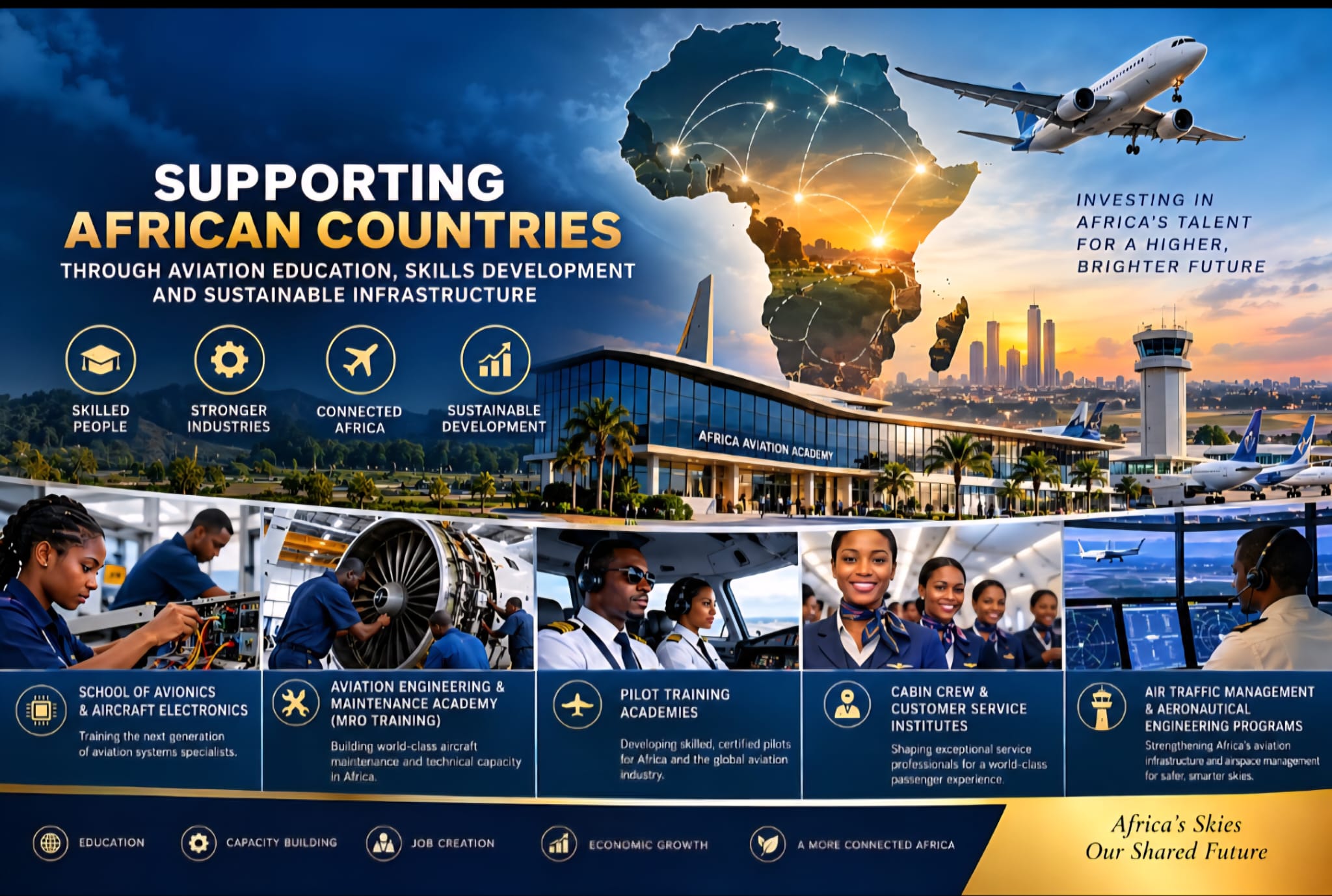
1. Education & Workforce Development – Centres of Excellence
AIIL’s aviation vision begins with human capital. Skilled professionals are the foundation of any thriving aviation ecosystem. AIIL will establish and expand accredited institutions to provide training across multiple disciplines, aligned with global aviation standards:
- School of Avionics & Aircraft Electronics – training avionics technicians, systems integrators, and certification experts.
- Aviation Engineering & Maintenance Academy (MRO Training) – airframe and powerplant (A&P), composite repair, NDT, and licensed engine workshops.
- Pilot Training Academies – equipped with multi-engine simulators, modular CPL/IR/MER courses, and pathways to airline careers.
- Cabin Crew & Customer Service Institutes – focusing on safety, first aid, passenger service, and security basics.
- Air Traffic Management & Aeronautical Engineering Programs – covering CNS/ATM, navigation, ADS-B, and performance-based navigation training.
Impact: This strategy reduces costly overseas training, retains MRO spending within Africa, nurtures globally competitive professionals, and builds a sustainable talent pipeline.
2. MRO & Technical Hubs
Aviation in Africa is plagued by the high cost of ferrying aircraft abroad for maintenance. AIIL will invest in regional Maintenance, Repair, and Overhaul (MRO) hubs near major airports.
These hubs will deliver:
- Heavy aircraft maintenance and component repair services.
- Engine shops with advanced diagnostic and testing equipment.
- Partnerships with OEMs (e.g., Boeing, Airbus, Embraer) for certification, technology transfer, and training.
- Support for ACMI and leasing operators by reducing downtime and costs.
Impact: Establishing MRO hubs will keep aviation spending within Africa, build technical capacity, and transform select African airports into regional aviation clusters.
3. Airport Modernization & Network Optimization
AIIL advocates a quality over quantity approach. Rather than expanding the number of airports, AIIL focuses on upgrading and optimizing a smaller number of viable hubs to achieve maximum economic impact.
- International & Domestic Hubs: Prioritize efficiency, safety, and passenger experience.
- Cargo Terminals & Logistics Parks: Dedicated facilities to capture e-commerce growth, perishable goods exports, and industrial shipments.
- Repurposed Airstrips: Secondary fields adapted for feeder services, pilot training, or local cargo hubs.
Impact: This strategy maximizes utilization, improves connectivity, and balances regional development with global competitiveness.
4. Airside & Landside Infrastructure Upgrades
- Modern aviation requires robust technical systems and seamless passenger flows. AIIL will invest in:
- Airside Systems: Runways, taxiways, aprons, advanced ground lighting, stormwater management, and resilient pavements.
- Landside Systems: Road and rail access, optimized parking, streamlined security screening, and efficient terminal layouts.
- Digital Infrastructure: Common-use systems, airport operating databases (AODB), e-gates, and real-time cargo tracking for efficiency and transparency.
Impact: Strengthened airport infrastructure enhances safety, efficiency, and competitiveness, while also attracting international carriers.
Financing Model
AIIL leverages its secured financing partnerships with global lenders and development institutions to structure aviation investments through transparent bank-to-bank frameworks. This ensures:
- Competitive, long-term financing options.
- Guaranteed returns on investment.
- Adherence to global best practices in financial governance.
Human Capital & Career Pathways
AIIL’s aviation initiative will generate thousands of direct aviation jobs and tens of thousands of indirect jobs across related industries such as logistics, hospitality, and retail.
Career opportunities include:
- Pilots (PPL → CPL → ATP)
- Air Traffic Controllers
- Avionics & Aircraft Technicians (A&P, composites, engines)
- Cabin Crew & Passenger Service Staff
- Ground Handling & Ramp Supervisors
- Cargo & Freight Logistics Specialists
- Airport & Terminal Managers
- Aerodrome Engineers (pavement, lighting, safety systems)
- MRO Planners, Quality Assurance Officers, Certification Inspectors
- Aviation Trainers, Examiners, and Curriculum Developers
- Airline Commercial Roles (network planners, yield managers, IT, HR, finance, operations)
Impact: By creating career ladders across the value chain, AIIL ensures Africa’s aviation sector becomes a global competitor while providing youth with sustainable employment opportunities.
Strategic Impact
- Boost Regional Trade & Tourism: Strengthened hubs and cargo systems expand connectivity across Africa and global markets.
- Develop Local Talent: Centres of excellence create world-class professionals trained and certified locally.
- Reduce Costs & Leakages: MRO hubs and training centers retain billions in Africa that currently flow overseas.
- Stimulate Economic Growth: Aviation-driven clusters generate multiplier effects across supply chains, tourism, and manufacturing.
- Support Continental Integration: Enhanced air transport infrastructure strengthens AfCFTA and regional economic cooperation.
Conclusion
The AIIL Aviation Infrastructure Initiative is a blueprint for Africa’s ascent into the global aviation economy. By strategically investing in human capital, MRO hubs, airport modernization, and digital transformation, AIIL is not just upgrading runways and terminals — it is building an ecosystem that empowers Africa to control its skies, create jobs, and foster sustainable growth.
Through visionary leadership, financing innovation, and partnerships with governments and global aviation leaders, AIIL positions aviation as a pillar of Africa’s economic transformation and a catalyst for regional integration in the 21st century.
Featured Projects
Our featured projects highlight impactful initiatives that drive sustainable development and innovation across the African continent. Each project is designed to strengthen critical infrastructure, promote economic growth, and improve quality of life. Our commitment is to building resilient communities and empowering future generations. Through strategic partnerships, cutting-edge technology, and local capacity building, we are shaping a more inclusive and prosperous Africa.